
English| EUR
Suggested for you
More currencies
Choose a language
Zion and Bryce Canyon share a corner of Southern Utah, USA, but sit in different worlds: one a river gorge, the other a plateau rim of hoodoos. Choosing a base between them decides how early you reach a trailhead and how much driving fills each day. This where to stay when visiting zion and bryce canyon guide sets out how the geography shapes that choice.
Quick answer
Most visitors split their nights: one base beside Zion's south entrance at Springdale, another on the Bryce plateau near Tropic or Bryce Canyon City. Both parks stay open 00:00–23:59 every day, so lodging position matters more than gate hours — a bed within minutes of an entrance makes the 06:00–08:00 arrival window realistic. Entrance costs 135 USD.
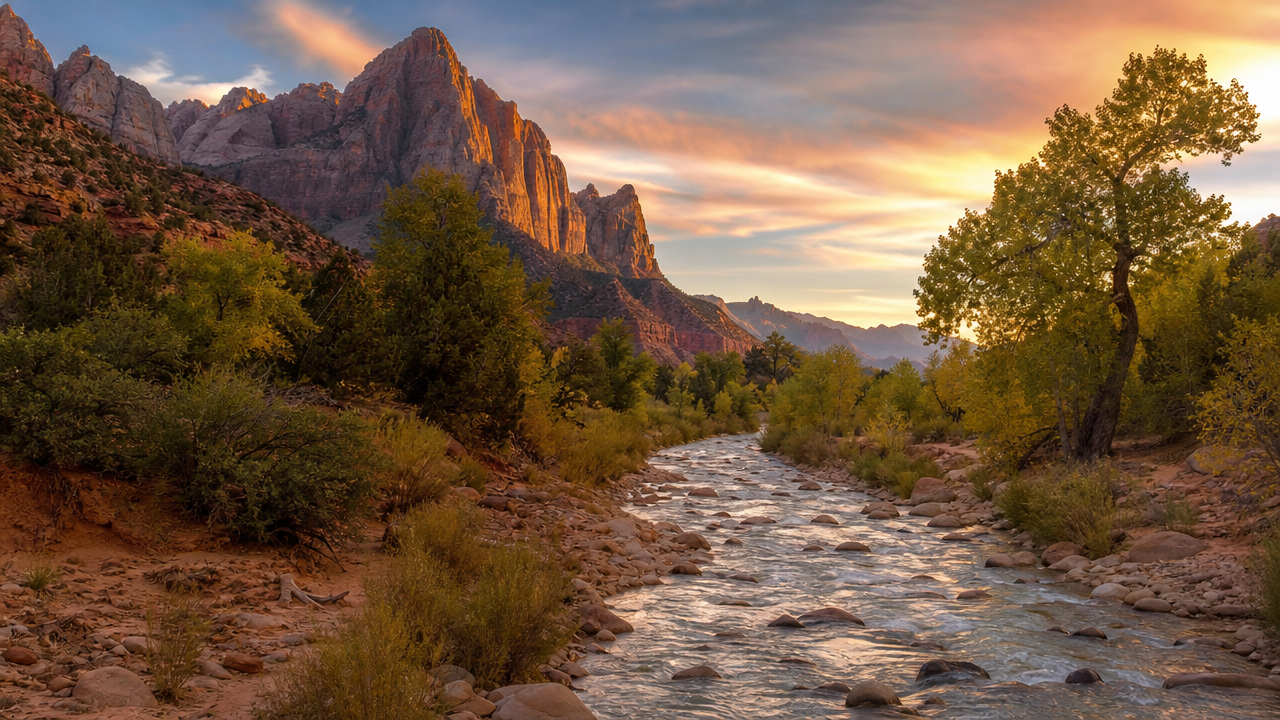
Neither park closes. Both operate 00:00–23:59, seven days a week, every week of the year, which appears to drain all urgency from the question of where to stay when visiting zion and bryce canyon. The opposite is true. When access is unlimited, the constraint moves elsewhere: to parking, to shuttle queues, and to the 06:00–08:00 arrival window in which trailhead lots at either park are still half empty. On a map the two parks look like neighbours. On the ground they behave as separate regions. Zion occupies a gorge cut by the Virgin River, with the village of Springdale pressed directly against its south entrance and the Watchman rising behind it. Bryce Canyon sits on a plateau nearly a mile higher, its amphitheatre of hoodoos best read from Sunrise Point and the Rim Trail in the first hour of daylight. The road linking them threads the Mount Carmel Tunnel before dropping onto Highway 89, a change of climate as much as of scenery. Zion and Bryce Canyon lodging consequently falls into two orbits — the Springdale corridor to the west, and the Tropic, Panguitch and Bryce Canyon City cluster to the east — with Kanab sitting between the two. Choosing between these southern Utah basecamps is less about star ratings than about drive time at dawn. Elevation is the variable most first-time planners underestimate; a room on the rim and a room in the canyon do not offer the same August night. Cost matters too. Entrance is 135 USD, a standard vehicle fee of 35 USD plus a mandatory 100 USD non-US resident surcharge, so the number of park days a base town makes practical is worth weighing before anything is reserved. Travellers arriving from Las Vegas usually approach Zion first and finish on the Bryce plateau, a sequence that suits the terrain. Whichever direction the route runs, the honest answer to where to stay when visiting zion and bryce canyon is governed less by the property than by its distance from a gate at first light. Current conditions, closures and fee details are published at https://www.nps.gov.
“When access is unlimited, the constraint moves elsewhere: to parking, to shuttle queues, and to the first hour of daylight.”
Choosing where to stay involves balancing the canyon-floor access of Zion against the high-altitude rim proximity of Bryce Canyon. This comparison helps you prioritize your base location based on your preferred park experience.
| Zion Lodging (Springdale/Canyon Floor) true | Bryce Canyon Lodging (Park Rim/High Altitude) false | |
|---|---|---|
| Primary Terrain | Low-elevation canyon floor | High-elevation plateau rim |
| Proximity to Trailheads | Direct access to canyon shuttle | Walking distance to amphitheater trails |
| Atmosphere | Vertical sandstone walls and river proximity | Panoramic vistas and cooler alpine temperatures |
| Nighttime Environment | Shadowed by towering canyon cliffs | Dark sky stargazing opportunities |
Verdict: Stay in Zion if you prefer immediate access to canyon-floor hiking and river environments, or choose Bryce Canyon if you prioritize rim-side views and higher-altitude conditions.
Zion and Bryce Canyon National Parks are located in Southern Utah, USA, and are best accessed by car to navigate the distance between the two regions. Proximity to the Zion-Mount Carmel Highway (Highway 9) or the main park entrances significantly reduces travel time, allowing for more efficient daily access.
I-15 to SR-9 for Zion National Park
US-89 to SR-12 for Bryce Canyon National Park
SR-9 connecting Zion to US-89
The best arrival window is 06:00–08:00 to avoid peak midday crowds and secure parking at popular trailheads. Note that the entrance fee is 135 USD for a standard vehicle, which includes the mandatory non-US resident surcharge.
The optimal window for visiting Zion and Bryce Canyon is during the shoulder seasons of April to May and September to October. These months balance Zion's desert heat with Bryce Canyon's high-elevation climate, which remains cold well into spring.
Cool at Bryce, warm at Zion. Highs 60°F–80°F range.
Hot at Zion, pleasant at Bryce. Highs 90°F+ at Zion.
Mild temperatures across both parks. Highs 65°F–85°F.
Cold with snow likely at Bryce. Highs 30°F–50°F.
Verdict: Plan your stay for mid-week in April or October to benefit from stable weather and manageable visitation levels.
Dining options near these parks are concentrated in gateway towns where service centers provide a range of quick bites and sit-down meals. Visitors often choose between the convenience of proximity to park entrances and the variety found in larger community hubs.
restaurant
Located just outside the Zion National Park south entrance, this area hosts various dining establishments ranging from cafes to full-service restaurants.
restaurant
Situated near the Bryce Canyon National Park entrance, this hub offers multiple dining venues catering to park visitors.
cafe
Positioned immediately adjacent to the Zion Canyon visitor center, this area provides quick options for those starting their day early.
restaurant
Found in Bryce Canyon City, this historic establishment serves as a central food hub for visitors exploring the Bryce area.
market
Local markets in Springdale allow visitors to purchase supplies for picnics, which is a practical way to manage meals while inside the parks.
Lodging near Zion and Bryce Canyon books out months ahead, so work through these steps in order from the planning stage to the morning of your visit.
Everything you need to know about where to stay when visiting zion and bryce canyon
Choosing a base between the two parks or staying in gateway towns like Springdale or Bryce Canyon City provides the most flexibility for travelers. Many visitors find that staying closer to park entrances maximizes time spent exploring geological features rather than driving.
Staying inside the parks offers immediate access to hiking trails and shuttle systems, though availability is often limited. External lodging in surrounding communities provides a wider range of amenities and dining options for your stay.
High-demand periods require booking months ahead to secure preferred accommodation near these national monuments. Researching availability early is essential for those planning travel during the peak summer months.
Gateway towns offer diverse choices ranging from campsites and hostels to traditional hotels. Comparing these locations helps travelers find suitable lodging that aligns with their overall trip budget.
Arriving within the best arrival window of 06:00–08:00 is crucial for securing parking at popular trailheads. Selecting accommodation that offers shuttle access or proximity to park entrances can help mitigate parking challenges.
When planning your route, consider the drive time between the parks and the specific trailheads you wish to visit. Efficient planning allows you to make the most of the diverse landscapes and canyon views while maintaining a balanced schedule.