
English| EUR
Suggested for you
More currencies
Choose a language
Two of Utah's headline canyons sit barely seventy miles apart, yet the road between them climbs to nearly 8,000 feet, drops through red rock tunnels and passes ranch country that changes the mood of the day entirely. This bryce canyon to zion national park drive guide sets out how long the transfer really takes, which corridor suits your vehicle, and where the schedule tends to slip. Read it before you set an arrival time.
Quick answer
The standard bryce canyon to zion national park drive covers roughly 72 miles via Highway 12, US-89 and SR-9, and takes about 1 hour 45 minutes without stops. Allow three to four hours in practice. Zion's grounds are accessible 00:00–23:59 daily, and the recommended arrival window is 06:00–08:00 to secure parking during peak season.
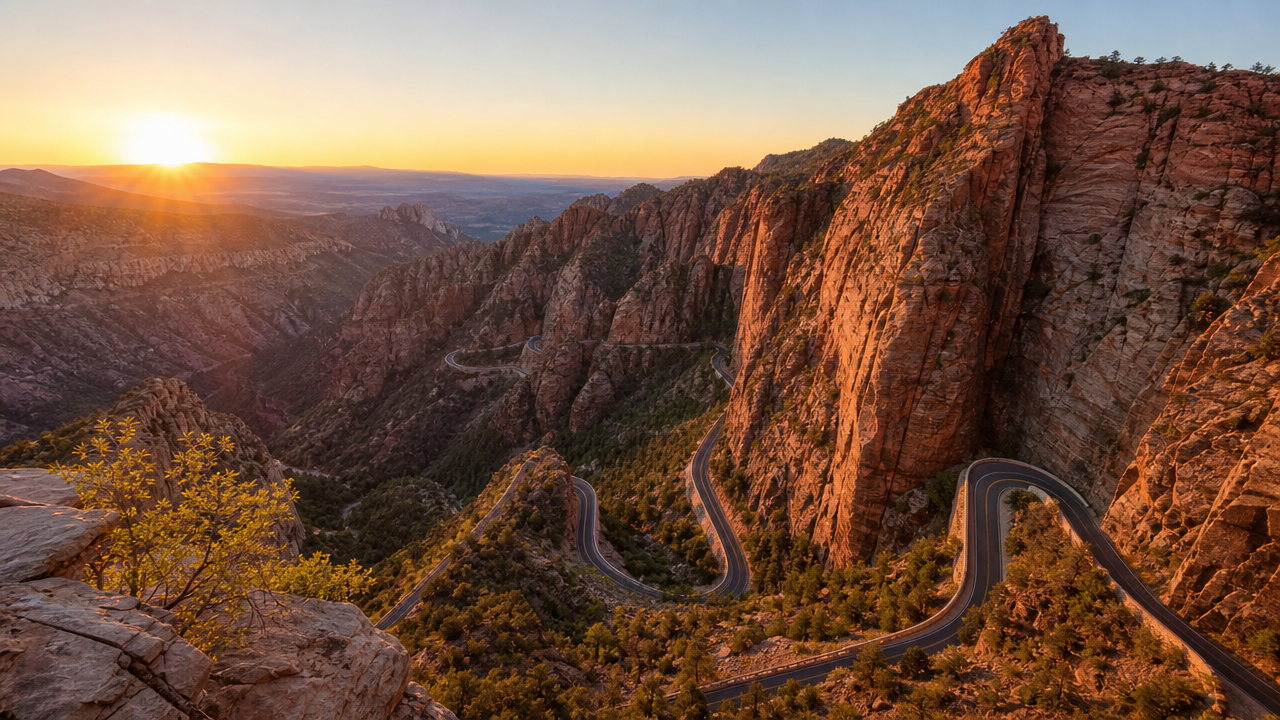
The Zion–Mount Carmel Tunnel, punched through sandstone in 1930, was engineered for cars roughly half the width of a modern motorhome — which is why oversized vehicles are still stopped at either portal and escorted through under one-way traffic control. That single 1.1-mile bore governs the timing of almost every bryce canyon to zion national park drive made in an RV, a trailer, or a large rental van. Travellers arriving in a compact sedan barely notice it. Everyone else should treat it as a scheduled event rather than a formality. The geography explains the rest. Bryce Canyon sits on the Paunsaugunt Plateau above 8,000 feet, a landscape of hoodoos, ponderosa forest and cold mornings even in August. Zion Canyon lies some 4,000 feet lower, cut by the Virgin River, where afternoon temperatures in summer routinely run twenty degrees warmer. The road between them descends through Red Canyon's arches on Highway 12, joins US-89 southbound through Hatch and Orderville, then turns west onto SR-9 at Mount Carmel Junction. From there the Zion–Mount Carmel Highway begins its series of switchbacks past Checkerboard Mesa toward the east entrance. It is a transition between two climates as much as two parks, and packing for one rarely covers the other. Seasoned drivers plan around three variables: elevation, light and livestock. Winter storms close nothing permanently on this corridor, but snow on the plateau and ice in shaded curves near Long Valley Junction can slow progress considerably, and afternoon monsoon cells in late summer bring brief, heavy rain. Open-range fencing along US-89 means cattle occasionally stand in the roadway at dawn and dusk. The eastern section of SR-9 offers few safe pull-outs, so photography stops need choosing in advance rather than improvising. Used well, this transfer becomes part of the itinerary instead of dead time. Red Canyon's tunnels, the Mossy Cave trailhead near Tropic, and the Moqui Cave collection outside Kanab all sit close enough to the route to justify a pause. Fuel is reliable in Panguitch, Hatch and Mount Carmel Junction, thinner in between. Anyone comparing this leg with a guided Zion and Bryce Canyon tour should weigh the flexibility of a self-drive route against the parking pressure waiting at the far end. For visitors building the bryce canyon to zion national park drive into a longer Southwest loop, the answer is usually to leave earlier than feels necessary. Park information: 435-772-3256.
“It is a transition between two climates as much as two parks, and packing for one rarely covers the other.”
This plan suits self-drive travellers leaving Bryce Canyon in the morning and reaching Zion the same day, using the Highway 12 to Highway 89 to Highway 9 route. Allow roughly seven hours door to door, of which about two hours is actual driving.
Fuel up at Bryce Canyon City before departing, as services thin out along Highway 89. Budget 15 minutes for the stop.
Pull into the Red Canyon Visitor Center turnout on Highway 12 for the arched rock tunnels. Around 30 minutes, including a short walk on the Pink Ledges Trail.
Roughly 50 minutes of steady driving through Hatch and Glendale. Cell coverage drops in stretches, so download your route beforehand.
Last reliable food, restrooms, and fuel before the park boundary. Allow 30 minutes here rather than counting on services inside Zion.
The 12-mile stretch to the east entrance includes Checkerboard Mesa and the 1.1-mile tunnel. Oversized vehicles need a tunnel escort, which can add 20 to 30 minutes of waiting.
Park at the Zion Canyon Visitor Center and switch to the park shuttle for the scenic drive. Expect 20 to 40 minutes in the shuttle queue during busy months.
Ride to Zion Lodge, the Grotto, and Temple of Sinawava, walking the paved Riverside Walk. Three to four hours covers the main stops at an unhurried pace.
Exit the park on foot or by shuttle into Springdale for dinner and lodging. Confirm the last shuttle time for your stop before you head up canyon.
The best arrival window for your drive is 06:00–08:00 to avoid mid-day heat and secure parking during peak season. Starting your journey early ensures you navigate the route effectively before peak visitor congestion occurs.
Mild temperatures (60°F–80°F). Spring provides pleasant conditions for driving and exploring Zion canyons.
High heat (90°F–105°F). Mid-day temperatures are often extreme, making early morning starts essential.
Cooler temperatures (55°F–75°F). This season offers stable weather suitable for longer drives and outdoor activities.
—
Arriving during weekday morning hours offers the highest probability of finding available parking at key trailheads.
Verdict: The concrete best slot is mid-week, arriving between 06:00 and 08:00 during the months of April or October.
Access to Zion National Park requires an entrance fee for vehicles. Fees are determined by the National Park Service and apply to standard passenger vehicles.
Verdict: A typical visitor pays 35 USD for a standard 7-day vehicle pass, though foreign adults may be subject to an additional 100 USD surcharge.
Zion National Park is open to visitors 24 hours a day, seven days a week, throughout the year.
Work through these preparations in order, starting weeks ahead and finishing the morning you set off.
Everything you need to know about bryce canyon to zion national park drive
The journey between these two iconic Utah destinations typically takes about two hours of driving time depending on traffic and stops. This scenic corridor offers a direct link for those planning a multi-park excursion.
We recommend departing between 06:00 and 08:00 to avoid mid-day heat and secure parking during peak season. Starting your bryce canyon to zion national park drive early ensures you arrive at trailheads before they reach maximum capacity.
The standard 7-day vehicle pass costs 35 USD and grants access to both locations. Foreign adults may require a 100 USD surcharge depending on current park policies.
Yes, this route is highly accessible for families and allows for multiple stops at geological viewpoints. Be sure to check the NPS official site for child-friendly activities and safety guidelines.
Many travelers underestimate the time needed for navigation and parking at popular landmarks. It is essential to monitor your fuel levels and follow posted speed limits on winding mountain roads to ensure a smooth bryce canyon to zion national park drive.
While there are small communities nearby, it is best to fuel up before leaving your starting point. You will find limited services in the remote stretches between these major red rock landmarks.
No special permits are required for private vehicles on this route, though standard entrance fees apply. Always keep your pass accessible to show park rangers at the gates.
While the parks remain open year-round, snow and ice can impact road conditions during winter months. Always check the official site at https://www.nps.gov/zion/index.htm for the latest updates before starting your excursion.